
It seems like NHS facilities teams are being asked to do more with less… again
If you’re responsible for facilities in an NHS hospital, the pressure rarely eases.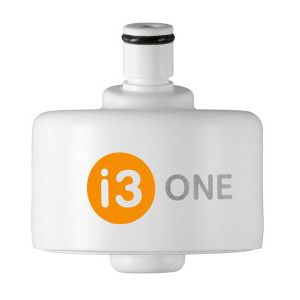
Budgets get tighter.
Time gets shorter.
Expectations keep growing.
And when it comes to water safety, there’s no room for mistakes.
So when a point-of-use (POU) filter blocks earlier than expected, the problem quickly lands on your desk.
On paper, the filter should last a certain number of days.
In reality, sometimes it doesn’t.
Flow drops.
A shower or tap becomes unusable.
A ward calls maintenance.
And suddenly you’re dealing with an unplanned replacement that wasn’t budgeted for.
It’s frustrating.
Not just because of the cost — but because of the pressure that comes with it. 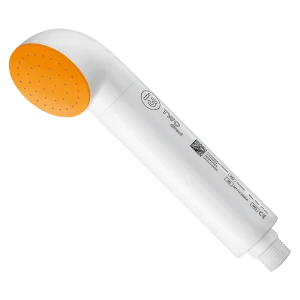 Infection prevention teams are watching closely. Staff need facilities to work. Senior management expects compliance and reliability.
It probably feels like you’re caught in the middle.
It sounds like the real issue isn’t the filter… it’s the technology behind it
Many of the POU filters widely used across healthcare today still rely on hollow fibre membrane technology developed more than 25 years ago.
When it was first introduced, it was a breakthrough.
But the design relies on bundles of extremely fine capillary fibres. Over time 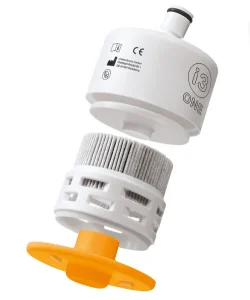 those fibres can clog, restrict flow, or become damaged — particularly in environments with heavy use or variable water quality.
Which means filters sometimes block earlier than expected.
And when that happens, the cost isn’t just the filter itself.
It’s the disruption, the labour, the unexpected replacements, and the questions that follow.
Here’s an interesting question
You probably wouldn’t accept 25-year-old technology in your smartphone.
It would feel slow.
Outdated.
Unreliable.
Yet many hospitals are still relying on filtration technology from the same era to protect patients and staff from waterborne pathogens.
That’s not a criticism of estates teams.
It’s simply the reality of how slowly infrastructure technologies evolve.
The i3 approach: modern filtration designed to solve the problems older systems create
The i3 POU filtration system was developed to move beyond the limitations of  traditional hollow fibre filters.
Instead of fragile fibre bundles, i3 filters use a modern flat-membrane filtration structure designed for greater strength and more consistent water flow.
For facilities teams, that brings some practical advantages:
More stable flow performance
The membrane structure allows water to pass evenly, helping reduce the risk of early blockage.
Greater mechanical reliability
Without delicate fibre bundles, the filter is far less vulnerable to structural damage or restriction.
More predictable filter life
Less clogging means filters are far more likely to perform for their intended service period.
Less operational disruption
Fewer unexpected blockages means fewer emergency replacements and fewer calls from frustrated wards.
Visibility across your estate
Another challenge facilities managers often mention is tracking filters across a 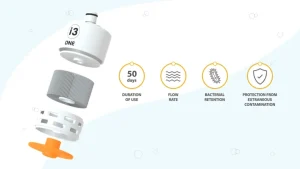 hospital estate.
Knowing exactly where filters are installed, when they were fitted, and when they need replacing can quickly become difficult.
That’s why i3 filters include free digital asset tracking software.
Each filter carries a unique identification code, allowing teams to:
-
record installation dates
-
track filters by ward or department
-
maintain clear compliance records
-
schedule replacements with confidence
The result is better visibility and control without increasing administrative workload.
And then there’s the real concern: what if changing systems doesn’t work?
This is something many facilities managers think about but rarely say out loud.
Introducing something new can feel risky.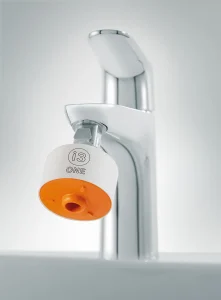
If it works, it’s expected.
If it doesn’t, the responsibility often falls on the person who approved the change.
That hesitation makes sense.
Which is why many estates teams start by simply asking questions and exploring alternatives before making any decisions.
A better question to ask
Instead of asking “Should we change filtration technology?”
A more useful question might be:
“What would happen if we used filtration technology designed for today’s hospital environments rather than one developed decades ago?”
For many estates teams, the answer often comes down to something simple:
more predictable performance, fewer unexpected problems, and less pressure on already stretched teams.
If you’re curious, let’s have a conversation
If any of this sounds familiar, you might find it useful to explore how the i3 POU filtration system works in practice.
You can view more details on our website or simply have a quick conversation about how other hospital estates teams are approaching this challenge.
📞 Call: 01628 529024
email: chris@challisms.com
🌐 Tap Filter Website: Click Here
🌐 Shower Filter Website: Click Here
No pressure. No hard sell.
Just a straightforward conversation about reducing blocked filters, improving reliability, and giving facilities teams one less problem to deal with.