
Practical Water Safety Solutions for Every Estate
Executive Summary
Healthcare and commercial estates are operating under increasing pressure to  maintain robust water safety compliance while managing limited budgets, constrained resources and rising expectations around infection prevention. Effective control of risks such as Legionella and Pseudomonas requires more than a one-size-fits-all approach; it demands flexible, scalable solutions that can be tailored to the specific needs of each site.
This guide introduces four complementary Challis Ag+ water safety strategies designed to support estates teams in achieving compliant, practical and cost-effective outcomes. Covering Standard Schemes, Sentinel managed protection, point-of-use filtration and in-house cleaning exchange systems, the portfolio enables organisations to select the right level of intervention based on risk profile, operational capacity and financial constraints.
The objective is simple: to help facilities managers deliver safer environments, improve audit readiness and reduce operational burden without compromising on performance or compliance standards.
Matching Compliance, Budget and Operational Reality with the Right Challis Ag+ Strategy
Water safety management across healthcare and commercial estates has never been more challenging.
Facilities managers are under constant pressure to improve compliance, reduce risk, control operational costs and maintain safe environments for patients, residents, staff and visitors — all while working within tightening budgets and stretched resources.
At the same time, expectations around water hygiene continue to increase.
Legionella control, Pseudomonas management, infection prevention, auditability, sustainability targets and operational resilience are now central to estates management strategies across healthcare and commercial buildings alike.
The difficulty is not usually understanding the risks.
The real challenge is identifying a practical, sustainable and cost-effective solution that genuinely works for the individual site.
Every estate is different.
Some facilities require a highly controlled managed solution. Others need a lower capital expenditure approach that still delivers strong protection and compliance benefits. Some sites need rapid deployment in higher-risk environments, while others require a more flexible strategy to support ageing infrastructure and limited maintenance resources.
This is precisely why a single “one size fits all” approach rarely works in practice.
The Challis Ag+ portfolio has therefore been developed to provide four distinct but complementary water safety solutions, enabling estates teams to select the most appropriate level of protection, management and investment for their specific operational challenges.
These include:
- The Challis Ag+ Standard Scheme
- The Challis Ag+ Sentinel Scheme
- Challis Ag+ I3 Point of Use Filters
- Challis Ag+ In-House Cleaning & Exchange Scheme
Together, these solutions provide a scalable and bespoke approach to outlet protection, helping estates teams balance compliance obligations with operational realities.
Understanding the Modern Estates Challenge
For many facilities managers, water safety management has become a constant balancing act.
The Compliance Challenge
Healthcare guidance and industry standards continue to place increasing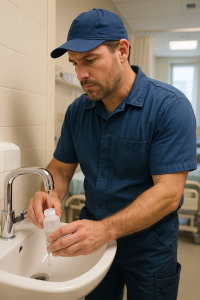 emphasis on proactive water hygiene management.
Whether managing hospitals, care homes, clinics, leisure facilities or commercial buildings, organisations must demonstrate robust control measures to minimise the risks associated with waterborne pathogens such as:
- Legionella
- Pseudomonas aeruginosa
- E. coli
- Biofilm-related contamination
Compliance is no longer simply about having policies in place.
It is about demonstrating:
- Risk reduction
- Monitoring
- Traceability
- Maintenance
- Corrective action
- Audit-ready documentation
This places significant pressure on estates teams already operating with limited time and personnel.
Budget Constraints Continue to Grow
While compliance expectations rise, budgets often move in the opposite direction.
Capital expenditure approvals can be difficult to secure, particularly across large estates with ageing infrastructure and competing priorities.
Facilities managers therefore face difficult decisions:
- Where should investment be prioritised?
- Which outlets represent the highest risk?
- Is a full replacement strategy realistic?
- Can existing infrastructure be upgraded instead?
- What solution provides the greatest long-term value?
The reality is that many estates require phased or flexible approaches rather than major single-stage investment.
Resource Pressures Are Now a Major Risk Factor
Staff shortages and increasing operational demands also create additional challenges.
Many estates teams are managing:
- Reduced engineering resource
- Increased compliance workloads
- Reactive maintenance pressures
- Larger estates portfolios
- Greater reporting requirements
Solutions that are overly complex or labour-intensive can quickly become difficult to sustain operationally.
Facilities managers increasingly require systems and products that are:
- Simple to manage
- Easy to audit
- Reliable in operation
- Practical for maintenance teams
- Sustainable long-term
Resistance to Change Is Understandable
Another major challenge is operational resistance to change.
Many estates teams have experienced:
- Complicated systems that failed to deliver
- Expensive technologies with limited real-world benefit
- Disruption during implementation
- Increased maintenance burdens
- Difficult user adoption
As a result, decision-makers are understandably cautious.
They want proven solutions that integrate easily into operational workflows without creating additional problems.
This is where practical, scalable and flexible product options become essential.
The Challis Ag+ Approach
The Challis Ag+ portfolio has been specifically designed around real operational challenges faced by healthcare and commercial estates.
Rather than forcing clients into a single fixed solution, the portfolio provides multiple levels of protection and management depending on:
- Risk profile
- Budget availability
- Infrastructure condition
- Resource capability
- Compliance requirements
- Infection prevention strategy
This creates a far more practical pathway to achieving water safety improvements.
Instead of asking:
“What is the most expensive solution?”
Facilities teams can instead ask:
“What is the most appropriate solution for our site?”
The Challis Ag+ Standard Scheme
Reliable Protection with Practical Cost Control
The Challis Ag+ Standard Scheme provides a highly effective and practical 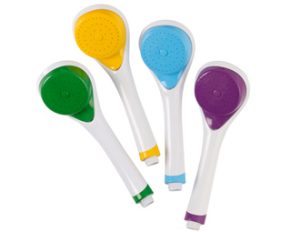 solution for estates seeking improved outlet hygiene protection without major operational complexity or excessive capital expenditure.
The scheme combines robust shower heads and hoses with integrated antimicrobial technology designed to support water hygiene management and reduce contamination risks at the point of use.
Key Benefits
24/7 Antimicrobial Protection
The Ag+ technology provides continuous antimicrobial protection designed to help inhibit microbial growth on shower components between cleans and usage periods.
This is particularly valuable in environments where moisture, warmth and stagnation can create ideal conditions for microbial development.
Easy to Maintain
One of the key strengths of the Standard Scheme is operational simplicity.
The showers and hoses are designed to be:
- Easy to dismantle
- Straightforward to clean
- Robust in construction
- Reliable in daily use
This supports estates teams by reducing maintenance burden while improving consistency of cleaning procedures.
Cost-Effective Compliance Support
For many facilities, the Standard Scheme represents an ideal balance between performance and affordability.
It enables organisations to improve outlet hygiene standards without requiring significant infrastructure changes or high upfront investment.
This makes it particularly suitable for:
- Community healthcare
- Care homes
- Commercial washrooms
- Lower-risk environments
- Phased estate upgrades
Reduced Operational Disruption
Implementation can often be achieved quickly and efficiently with minimal disruption to operational areas.
This is especially important in live healthcare environments where room downtime can directly impact service delivery.
The Challis Ag+ Sentinel Scheme
Advanced Managed Protection for Higher-Risk Environments
For facilities requiring enhanced levels of water hygiene management, the Challis 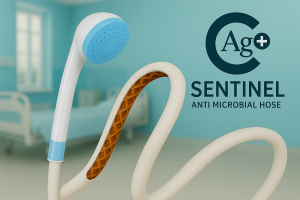 Ag+ Sentinel Scheme provides a more advanced managed solution.
The Sentinel approach has been developed for environments where risk reduction, auditability and infection prevention are particularly critical.
Designed for Higher-Risk Applications
Higher dependency healthcare areas often require greater levels of control and assurance.
This may include:
- Acute healthcare environments
- Critical care settings
- Enhanced infection prevention areas
- High-risk patient groups
- Facilities with recurring contamination concerns
The Sentinel Scheme supports these environments through enhanced outlet management strategies.
Enhanced Hygiene Control
The Sentinel solution focuses heavily on:
- Improved outlet protection
- Simplified maintenance procedures
- Enhanced cleaning protocols
- Greater visual management
- Improved compliance support
This creates a more controlled and structured approach to outlet hygiene management.
Improved Auditability
Audit readiness has become increasingly important across healthcare estates.
Facilities managers are frequently required to demonstrate:
- Cleaning compliance
- Maintenance schedules
- Risk mitigation activity
- Infection prevention measures
The Sentinel Scheme supports this through clear operational processes and enhanced management visibility.
Supporting Infection Prevention Teams
One of the major advantages of the Sentinel approach is improved collaboration between:
- Estates teams
- Infection prevention teams
- Water safety groups
- Compliance managers
By providing a clearly defined management strategy, the scheme helps improve confidence across multiple stakeholders.
Challis Ag+ I3 Point of Use Filters
Immediate Protection Where Risk Is Highest
In some situations, facilities require immediate and highly targeted intervention.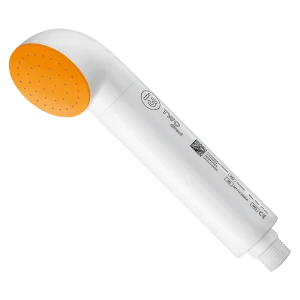
This is where the Challis Ag+ I3 Point of Use Filters provide significant value.
POU filters are often essential when managing:
- High-risk patients
- Immunocompromised users
- Suspected contamination events
- Outbreak response
- Temporary control measures
- Critical care environments
High-Level Filtration Protection
The I3 filters are designed to provide highly effective point-of-use filtration 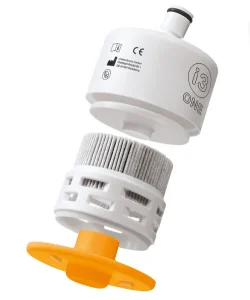 directly at the outlet.
This creates an important final barrier between the water system and the end user.
Rapid Deployment
One of the biggest advantages of POU filtration is speed of implementation.
Filters can often be deployed rapidly in response to:
- Positive sampling results
- Increased infection risks
- Emergency situations
- Temporary control measures
- Planned remediation works
This enables estates teams to react quickly while longer-term strategies are developed.
Flexible Risk Management
Not every site requires permanent filtration across every outlet.
The I3 solution allows facilities managers to target protection precisely where it is needed most.
This creates a far more efficient use of budget and resources.
Supporting Wider Water Safety Strategies
POU filtration is most effective when integrated into a wider water safety management plan.
The I3 range therefore complements the broader Challis Ag+ portfolio, allowing estates teams to combine multiple approaches depending on operational requirements.
Challis Ag+ In-House Cleaning & Exchange Scheme
A Practical, Cost-Conscious Alternative
Many organisations require improved compliance and hygiene standards but may not have the budget or operational need for fully managed replacement schemes.
The Challis Ag+ In-House Cleaning & Exchange Scheme was developed specifically to address this challenge.
Two Sets of Colour-Coded Ag+ Heads & Hoses
The scheme provides clients with two complete sets of colour-coded Ag+ shower heads and hoses.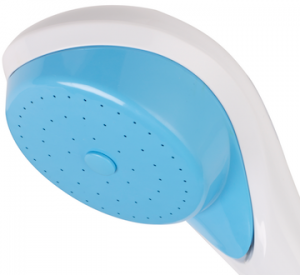
This enables simple rotation during cleaning cycles.
While one set is in use, the second set can be:
- Cleaned
- Disinfected
- Inspected
- Prepared for reinstallation
This creates a structured and highly visible cleaning management process.
Instant Visual Audit Support
Colour coding provides immediate visual confirmation that exchanges have taken place.
This creates several important operational advantages:
- Easier compliance monitoring
- Faster visual auditing
- Improved staff accountability
- Reduced risk of missed exchanges
- Clearer management oversight
Simple visual systems are often far more effective than overly complicated compliance processes.
24/7 Antimicrobial Protection
Like the wider Ag+ portfolio, the scheme benefits from continuous antimicrobial protection to help support hygiene standards between cleaning cycles.
Reduced Capital Expenditure
The In-House Cleaning & Exchange Scheme provides a particularly attractive option for facilities seeking improved control while managing budget limitations.
It delivers:
- Lower upfront costs
- Greater operational flexibility
- Improved sustainability
- Reduced replacement waste
- Enhanced lifespan of components
Ideal for Resource-Conscious Estates
The scheme is especially valuable where estates teams require:
- Greater ownership of processes
- More flexible cleaning schedules
- Lower ongoing operational costs
- Practical implementation
- Minimal disruption
It empowers internal teams while still supporting strong hygiene management standards.
Why Flexible Solutions Matter
One of the biggest mistakes organisations make is assuming every outlet or every building requires the same level of intervention.
In reality, estates are rarely uniform.
Different buildings — and even different departments within the same building — often have very different:
- Risk profiles
- Usage patterns
- Patient vulnerability levels
- Budget availability
- Infrastructure limitations
- Maintenance capabilities
This is why flexible, scalable strategies are essential.
The ability to combine multiple approaches allows facilities managers to target investment where it delivers the greatest operational and compliance value.
For example:
- High-risk areas may benefit from Sentinel or I3 protection
- Lower-risk areas may suit the Standard Scheme
- Budget-sensitive sites may benefit from the In-House Exchange approach
This creates a far more intelligent and sustainable estates strategy.
Supporting Sustainability & Long-Term Value
Modern estates management is not only about compliance.
Increasingly, organisations are also being measured against:
- Sustainability targets
- Waste reduction
- Asset longevity
- Resource efficiency
- Carbon reduction strategies
The Challis Ag+ portfolio supports these goals through:
- Durable product design
- Reduced replacement frequency
- Simplified maintenance
- Efficient cleaning processes
- Extended operational lifespan
This helps organisations improve both environmental and financial sustainability simultaneously.
Simplifying Operational Management
One of the most overlooked aspects of water safety management is operational practicality.
Even technically effective systems can fail if they are:
- Too complicated
- Too labour-intensive
- Difficult to audit
- Hard to maintain
- Poorly understood by staff
The Challis Ag+ approach prioritises practical usability alongside technical performance.
This includes:
- Easy dismantling
- Straightforward cleaning
- Clear visual management
- Reliable performance
- Simplified implementation
The result is greater long-term consistency and improved compliance confidence.
A Bespoke Solution for Every Estate
No two estates are identical.
That is why the most effective water safety strategies are never built around rigid product-only thinking.
They are built around understanding:
- Site-specific challenges
- Operational limitations
- Risk exposure
- Budget realities
- Compliance priorities
- Long-term objectives
The strength of the Challis Ag+ portfolio is that it allows organisations to create a bespoke solution tailored to their exact requirements.
Whether the priority is:
- Reducing capital expenditure
- Enhancing infection prevention
- Improving auditability
- Supporting internal cleaning teams
- Deploying rapid filtration protection
- Simplifying operational management
There is a practical and scalable solution available.
Conclusion
Smarter Water Safety Starts with the Right Strategy
Facilities managers today face enormous pressure.
They must maintain safe, compliant and operationally efficient environments while balancing financial constraints, staffing pressures and growing compliance demands.
There is no universal solution.
What matters is selecting the right level of protection for the specific risks, resources and operational realities of the estate.
The Challis Ag+ portfolio has been designed specifically around this principle.
By offering four complementary solutions — the Standard Scheme, Sentinel Scheme, I3 Point of Use Filters and In-House Cleaning & Exchange Scheme — Challis Ag+ enables organisations to implement a tailored strategy that works for their site, their budget and their operational goals.
Rather than forcing compromise between compliance and affordability, the portfolio provides practical pathways to achieving both.
The result is a smarter, more flexible and more sustainable approach to water safety management across healthcare and commercial estates.
Find the Right Solution for Your Estate
Every site faces unique challenges.
The key is finding the solution that best aligns with your operational needs, compliance priorities and available resources.
To discuss a bespoke Challis Ag+ strategy for your facility, contact the team today and discover how flexible water safety solutions can help improve compliance, reduce risk and support long-term operational resilience.