
 |
|
Challis MS Ltd | Expert insight for housing, asset, compliance and water-safety teams
| The central point: water safety becomes easier to manage when tenant protection, outlet hygiene, anti-scald control, thermal disinfection and auditable maintenance are designed as one coordinated programme. |
Safe homes require more than a policy
Housing associations carry a clear responsibility to provide homes that are safe, well maintained and fit for occupation. Water safety sits firmly within that responsibility. Legionella, Pseudomonas and other waterborne pathogens are not abstract technical concerns: they are risks that must be assessed, controlled and managed through competent people, proportionate measures and reliable records.
The Health and Safety Executive’s Approved Code of Practice L8 is aimed at employers, landlords and others in control of premises. It requires dutyholders to identify and assess sources of risk, establish a scheme to prevent or control that risk, implement and monitor precautions, keep records and appoint a competent responsible person. HSE guidance also specifically recognises housing associations within its advice for smaller hot and cold water systems.
For most straightforward domestic systems, the risk assessment may conclude that existing controls are adequate. Yet a housing portfolio is rarely uniform. It can include sheltered schemes, supported living, communal facilities, void properties, high-rise blocks, older systems, properties with stored water and homes occupied by tenants whose age, illness or reduced immunity may increase their vulnerability. A single generic response is unlikely to be equally effective everywhere.
The overlooked point: where water leaves the outlet
Water safety programmes naturally focus on storage temperatures, distribution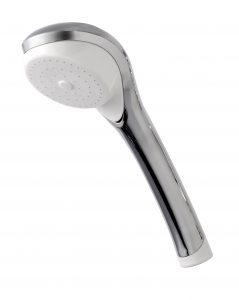 temperatures, flushing, sampling where appropriate and the removal of redundant pipework. All of these matter. However, protection should continue all the way to the point at which a tenant uses the water.
Showerheads and hoses are working components exposed to repeated wetting, periods of non-use, scale and contamination from the surrounding environment. HSE guidance tells landlords that tenants should regularly clean and disinfect showerheads. In practice, relying entirely on tenant behaviour creates inconsistency. Some tenants will follow instructions precisely; others may be physically unable to remove and clean a showerhead, may not understand the requirement or may simply forget.
That leaves housing providers with an important question: is issuing guidance enough for every property and every tenant, or would a planned outlet-management programme provide stronger assurance in selected homes and schemes?
NHS-grade protection for housing association tenants
Challis is the UK’s largest manufacturer of antimicrobial showers and an 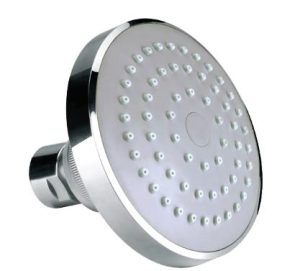 established supplier to NHS Trusts. The company supplies more than 90,000 showerheads and hoses annually to NHS organisations across the UK. That healthcare experience can now be applied to housing association properties, providing tenants with NHS-grade protection through products designed around infection control, practicality and repeatable maintenance.
Challis Ag+ showerheads, hoses and fixed showerheads use built-in antimicrobial silver-ion technology. The antimicrobial protection is incorporated into the product material rather than applied as a temporary surface treatment. It works continuously throughout the intended service life, adding protection between planned maintenance visits.
This is not a substitute for a Legionella risk assessment, temperature control, flushing, monitoring or a written control scheme. It is an additional barrier at the outlet: one that can be standardised across a portfolio and integrated into the housing provider’s established water-safety arrangements.
Replace, protect and prove
Traditional shower head maintenance often means removing the unit, dismantling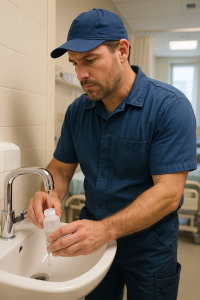 it, descaling it, disinfecting it, rinsing it, reassembling it, refitting it and recording the work. The visible cost may be a bottle of chemical. The real cost includes labour, access time, COSHH training, supervision, protective equipment, safe chemical handling, disposal, room disruption and the risk of components failing after repeated disassembly.
A planned Ag+ replacement programme changes the task. A used showerhead and hose can be exchanged for new, clean antimicrobial components in seconds. Quarterly colour coding can make the current service period immediately visible to operatives, supervisors and auditors. The housing association gains a repeatable process; the tenant gains a fresh outlet with continuous antimicrobial protection; the compliance team gains clearer evidence that the intervention has been completed.
Where a fixed showerhead is more appropriate, Challis can provide antimicrobial fixed-head options, allowing the same protection principles to be applied across different property types. This is valuable for communal showers, supported housing and settings where durability, standardisation or reduced handling are priorities.
Eligible used components can also be returned through the optional recycling service. This gives procurement and sustainability teams a practical route to reduce waste while maintaining a planned hygiene programme. UK manufacture further supports supply-chain resilience, shorter delivery routes and continuity of supply.
The second challenge: controlling bacteria without creating a scald risk
Temperature is the traditional control strategy for Legionella in hot and cold water systems. HSE guidance states that hot water should be stored at least at 60°C and distributed so it reaches 50°C within one minute at outlets, with different requirements applying in healthcare premises. At the same time, landlords must assess and control the risk of scalding, particularly where tenants are older, very young, disabled, have sensory loss or may not respond quickly to excessive temperature.
Thermostatic mixing valves help reconcile these competing demands. They blend hot and cold water to deliver a safer temperature at the shower during normal use. Yet conventional mixers can make thermal disinfection labour-intensive because maintenance teams may need to dismantle the valve, remove components or alter the arrangement before sufficiently hot water can pass through the mixer and outlet.
That is where the Challis Ag+ thermal-override shower mixer offers a significant operational advantage.
How the Challis thermal-override shower mixer helps
The Challis thermal-flushing mixer combines everyday anti-scald protection with 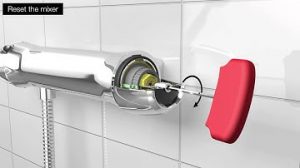 an integrated thermal-disinfection bypass. Under normal operation, the mixer controls the delivered temperature to help protect the tenant. When an authorised, trained maintenance operative needs to perform a thermal disinfection, a dedicated key engages the internal bypass so high-temperature water can be flushed through the valve and shower outlet without dismantling the mixer or disturbing the pipework.
Challis reports that thermal-flush preparation on many conventional healthcare mixing valves can take 20 to 30 minutes. Its integrated bypass can enable the preparation to be completed in under two minutes, plus the required flushing time. Actual procedures, temperatures and contact times must always follow the housing provider’s site-specific risk assessment, written control scheme and competent-person instructions.
For a housing association managing numerous mixers across supported housing, sheltered accommodation or communal facilities, the cumulative saving can be substantial. More importantly, simplifying the task can make it easier to complete consistently and document properly.
Six practical advantages of thermal override
Tenant protection in normal use: thermostatic control helps limit the temperature  delivered at the shower and reduces scald risk.
Rapid maintenance access: the dedicated override key provides controlled access to the thermal-disinfection function for authorised personnel.
No routine valve dismantling: the integrated bypass reduces the need to strip down complex mixers or disturb surrounding pipework.
Lower maintenance burden: less preparation time can reduce labour, room downtime and repetitive plumbing call-outs.
More consistent procedures: a standardised method is easier to train, supervise and incorporate into planned maintenance instructions.
Stronger evidence: temperature, duration, location, operative and completion details can be recorded against the asset as part of the compliance trail.
Thermal override must never be treated as an unrestricted user feature. The process involves deliberately introducing high-temperature water and therefore needs competent staff, controlled access, clear warning procedures, protection from tenant use during the flush and verification that the mixer has returned to safe normal operation before the shower is released.
One coordinated water-safety proposition
The strongest housing-association proposition is not a shower head in isolation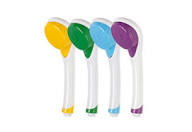 or a mixer in isolation. It is a coordinated set of controls that addresses the outlet throughout its operational life.
Ag+ antimicrobial handsets, hoses and fixed heads provide continuous material-based protection at the outlet.
Planned replacement removes the variability and hidden cost of repeated dismantling, cleaning and reassembly.
Colour coding provides immediate visual support for inspection and quarterly audit routines.
Thermostatic mixers help protect tenants from excessive shower temperatures during everyday use.
The controlled thermal override enables faster high-temperature flushing by authorised maintenance staff.
Optional recycling and UK manufacture support environmental and supply-chain objectives.
Asset records can connect each intervention to the property, outlet, operative and date.
This approach aligns naturally with the way leading housing providers already manage risk: categorising property types, recognising tenant vulnerability, assigning responsible people, using competent contractors, prioritising remedial work and maintaining records that demonstrate control.
A better business case than ‘just another product’
Housing teams are under pressure to improve safety and service quality while 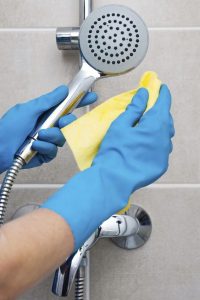 controlling cost. The right comparison is therefore not the purchase price of an Ag+ unit against the purchase price of a basic showerhead. It is the whole-life cost and assurance value of the complete process.
A standard unit may carry hidden cleaning labour, chemicals, training, access appointments, failures after reassembly and separate record keeping. A conventional mixer may require time-consuming preparation for thermal disinfection. A cheaper component that creates more work, greater inconsistency and weaker evidence is not necessarily the lower-cost option.
Challis Ag+ provides a commercially credible alternative: UK-manufactured, healthcare-proven products that simplify planned interventions and make completion easier to see and record. For residents, it means an added level of protection. For asset teams, it means standardisation. For compliance teams, it means a clearer audit trail. For procurement, it creates measurable added value beyond the component itself.
Start with a controlled pilot
A pilot is the most practical way to test the proposition against current arrangements. Select a representative group of properties – for example, a sheltered scheme, supported housing location or block with communal showers – and establish the baseline before installation.
Record the current showerhead cleaning time, chemical use, access requirements, failure rate, contractor cost and evidence produced. Where thermal disinfection is part of the control scheme, record the time required to prepare, flush, reinstate and verify existing mixers. Then compare the same measures after introducing Ag+ outlets and thermal-override mixers.
The pilot should be agreed with the responsible person and competent water-safety adviser. Success measures might include time per intervention, completed visits, missed access, remedial call-outs, tenant disruption, asset-record completeness, waste returned for recycling and total cost per maintained outlet.
This creates a decision based on the housing association’s own estate, tenants and operating data rather than assumptions. If the trial confirms faster maintenance, stronger evidence and improved protection, the programme can then be extended by property archetype and assessed risk.
Protecting tenants starts where water leaves the outlet
Housing associations cannot remove every water-safety risk with one product. Nor should any supplier suggest that they can. Effective control depends on a suitable risk assessment, competent management, appropriate temperatures, flushing, cleaning, monitoring, communication and accurate records.
What Challis can do is strengthen that system at a critical final point. Ag+ antimicrobial showers and hoses add continuous protection at the outlet. Fixed heads extend the approach across varied property types. Planned replacement makes maintenance faster and more visible. Thermal-override mixers protect tenants from scalding in everyday use while giving authorised teams a simpler route to thermal disinfection.
Together, these measures offer housing associations something more valuable than a replacement shower: a practical, NHS-proven approach that can protect tenants, reduce hidden workload and make compliance easier to demonstrate.
Speak to Challis
Challis can help housing, compliance and water-safety teams identify a suitable pilot, match products to property and tenant risk profiles, and build a planned replacement and thermal-disinfection approach around the organisation’s existing written control scheme.
www.challisms.com | info@challisms.com | 01628 529024
Add Challis Ag+ as a preferred source on Google. Click on the link below to help us grow
https://google.com/preferences/source?q=https://www.challisagplus.com
Sources and further reading
• Health and Safety Executive: Legionella and landlords’ responsibilities – https://www.hse.gov.uk/legionnaires/legionella-landlords-responsibilities.htm
• Health and Safety Executive: L8, The control of legionella bacteria in water systems – https://www.hse.gov.uk/pubns/books/l8.htm
• Health and Safety Executive: Hot and cold water systems – https://www.hse.gov.uk/legionnaires/hot-and-cold.htm
• Housing Leeds: Legionella policy – https://www.leeds.gov.uk/housing/housing-policies/legionella-policy
• Challis Ag+: Thermal Flushing Mixer – https://challisagplus.com/challis-ag-thermal-flushing-mixer-saving-time-money-resources/
• Challis Showers: Challis Ag+ Anti-Microbial Shower – https://www.challisshowers.com/product-page/challis-ag-anti-microbial-shower