
A practical digital companion to the Challis Ag+ and Challis Ag+ Sentinel schemes
There is a question many healthcare estates, water-safety and infection-control teams will recognise.
How much time is spent proving that essential work has been completed, rather than completing the work itself?
The shower head may have been changed correctly. The hose may be exactly where it should be in its planned cycle. Yet when somebody asks for proof, the answer can still involve several people, spreadsheets, emails, photographs and far too much searching.
That feels frustrating because the underlying task does not need to be complicated.
This is why Challis has introduced an intelligent asset-tracking option to complement the Challis Ag+ and Challis Ag+ Sentinel schemes. Developed with specialist technology partners, the software connects each shower location to a clear digital record that can be opened and updated from a familiar smartphone or tablet.
The principle is simple:
Fit it. Scan it. Prove it.
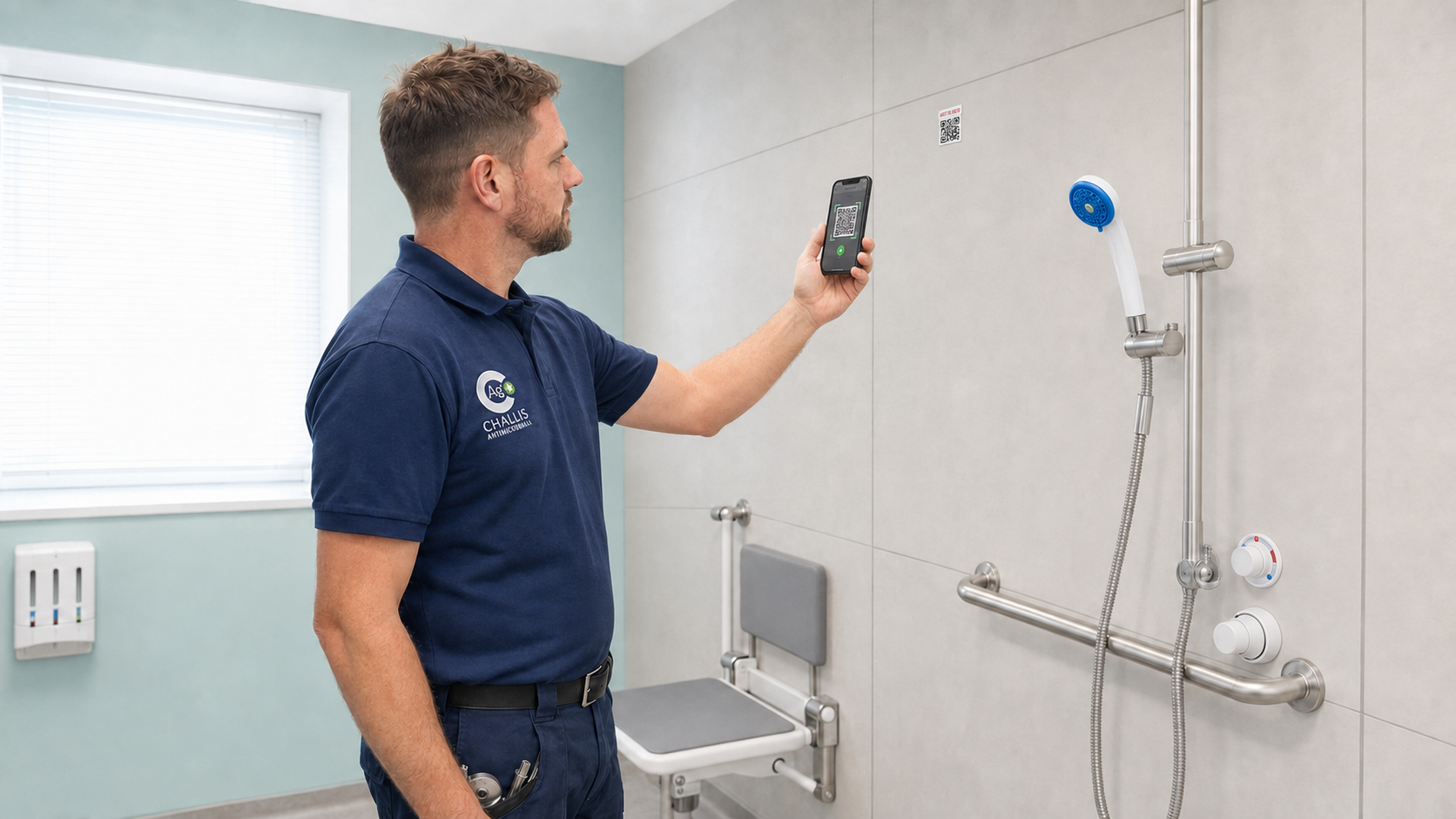
An operative fits the appropriate Challis shower head or hose, scans the asset label, follows a small number of guided fields and saves the record. The client gains structured information showing what was fitted, where it was fitted, when the work took place and who completed it. Photographs, notes, status updates and supporting information can be retained alongside the asset history.
No specialist scanning equipment is required. There is no complicated parallel process. The software is designed to make the existing Challis scheme easier to implement, easier to use, easier to audit and easier to report.
Compliance should feel controlled, not complicated
Good compliance often comes down to four straightforward questions:
What is installed?
Where is it located?
What action was completed, and when?
Can the organisation demonstrate that clearly?
The difficulty begins when each answer is held somewhere different.
An asset list may sit on a spreadsheet. A fitting date may be written on a worksheet. A photograph may remain on an operative’s phone. A defect may be reported by email. The contractor may maintain one replacement schedule while the client holds another.
None of these methods is unreasonable in isolation. The problem is their combined effect. Different formats create different versions of the truth. Manual copying introduces errors. Staff changes weaken continuity, and valuable time is spent reconciling information that should already agree.
Would it be unreasonable to suggest that the simplest compliance system is the one people will use consistently?
The Challis software is intended to reduce administration, not add to it. The person completing the work updates the relevant asset record at the point of activity using a device they already understand. Guided fields make consistent data capture the natural outcome.
Managers can then search, filter and review the same information without repeatedly contacting the fitting team. Audit evidence becomes part of routine work rather than a separate exercise assembled afterwards.
Challis Ag+: visible quarterly control with a digital record
The Challis Ag+ scheme is built around a refreshingly clear idea.
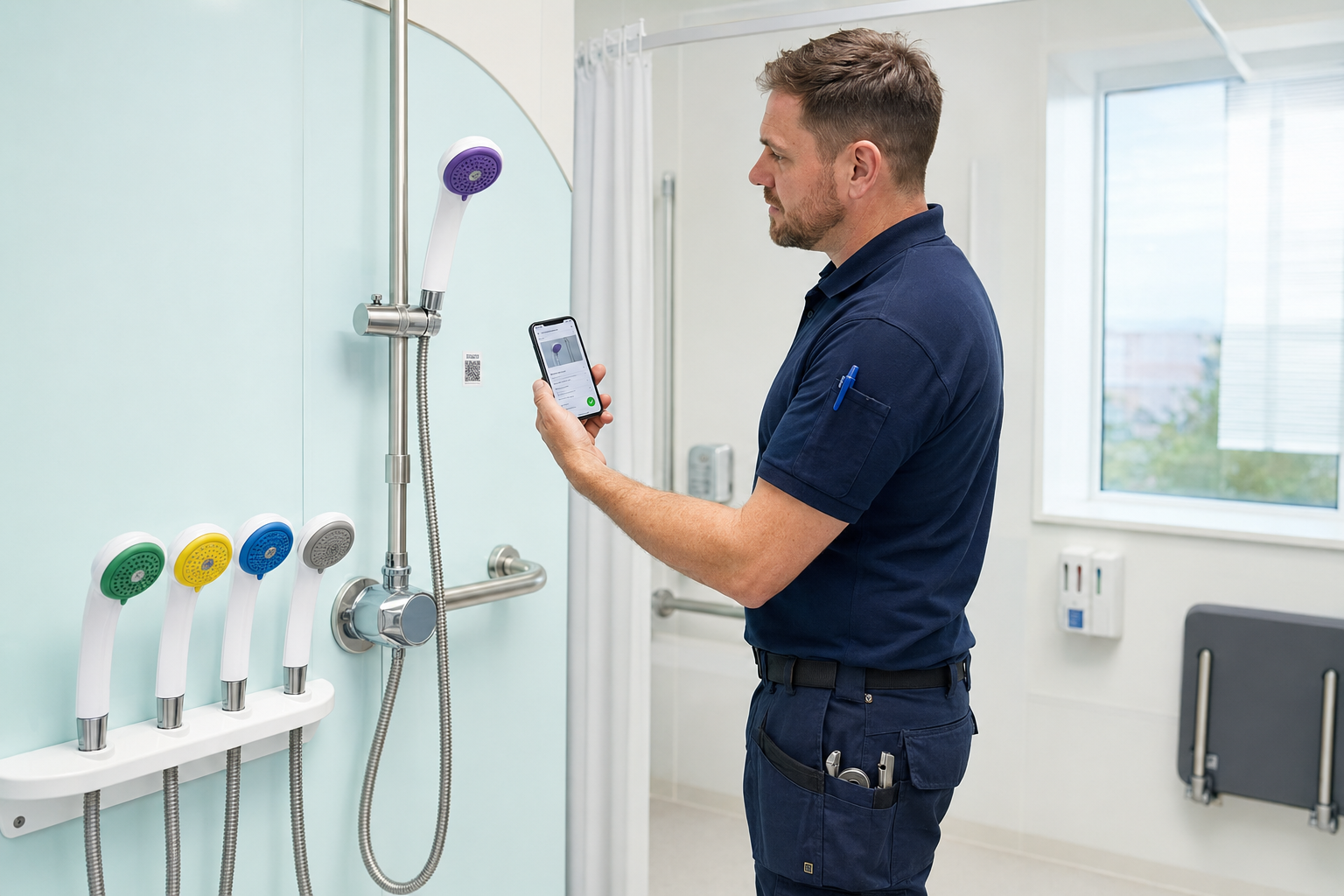
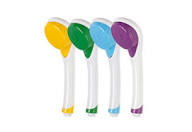
Each planned quarter has its own colour-coded shower head. The recognised green, yellow, blue and purple sequence gives estates, facilities and infection-control teams an immediate visual indication of the current replacement period.
The Standard scheme provides quarterly shower-head and hose replacement, creating an easy recurring cycle. Instead of repeatedly dismantling, descaling, cleaning, rinsing, checking and refitting standard components, the team replaces them with a new Challis Ag+ head-and-hose assembly according to the agreed programme.
Silver-ion antimicrobial technology is incorporated into the Challis Ag+ product, supporting continuous antimicrobial action within the material. The products are manufactured in the UK, with optional recycling support available.
The colour cycle turns an otherwise invisible date into something recognisable on the wall. A manager can see the current colour. An operative knows which component is due. A discrepancy is easier to identify.
The software adds the detail behind that visual control. It can record the exact location, installation date, operative, head colour, hose information, photograph and relevant notes.
Put the two together and the scheme becomes stronger. The physical product provides visible control at the outlet; the software provides structured evidence behind it. One helps the team recognise the cycle. The other helps the organisation prove what happened.
Challis Ag+ Sentinel: two planned cycles made easy to manage
 Some environments require an enhanced approach.
The Challis Ag+ Sentinel scheme combines quarterly colour-coded Ag+ shower heads with the Sentinel hose. The patented copper-mesh snake is contained within the hose itself, giving the hose the antimicrobial properties associated with copper pipe while its movement helps disturb biofilm on the hose interior.
The cycle is easy to understand:
Four colour-coded Challis Ag+ shower heads are changed across the planned quarterly cycle.
One Sentinel hose remains in place for its agreed annual cycle, subject to site conditions and the organisation’s water-safety arrangements.
Two cycles create an obvious record-keeping requirement. The client needs to distinguish between the shower-head history and the Sentinel hose history.
The software does this neatly. The asset record can identify the scheme, current head colour, head fitting date, hose type, hose fitting date, condition, location and next planned action.
The operative does not need to interpret a complicated spreadsheet. They scan the label and follow the prompts. Managers can see the head and hose information in context.
That makes the enhanced Sentinel scheme easier to administer, not harder. This is innovation doing what it should: helping people perform a necessary task more reliably and with less friction.
Implementation is deliberately straightforward
It would be understandable to hear “asset-tracking software” and imagine a lengthy IT project, extensive training and another difficult change programme.
The Challis approach is intentionally different. The system is configured around the shower-management process rather than forcing that process to bend around generic software.
A practical implementation can begin with one ward, building, hospital or another manageable group of outlets. The client and Challis agree the information that genuinely matters. Locations and asset references are structured, labels are assigned, user access is configured and the fitting team receives focused guidance based on the actions they will perform.
The field process is simple:
Fit the specified Challis shower head or hose.
Scan the asset label using a smartphone or tablet.
Open the correct digital record.
Confirm the guided information.
Add a photograph or note where required.
Save the update.
There is no benefit in asking teams to complete fields nobody uses. The objective is a focused record supporting fitting control, replacement planning, issue management, compliance and reporting.
A pilot allows the client to confirm that the terminology, fields and workflow suit its estate. User feedback can be incorporated before wider deployment, reducing disruption and giving the people using the system a genuine voice.
Once agreed, the approach can be repeated consistently across other locations.
Intuitive use makes adoption easier
Software is only useful if people can use it confidently.
The Challis system builds upon familiar actions. Most users already understand how to scan a code, open a record, select an option, take a photograph and press save.
Clear labels and guided fields show the user what is required. The correct asset record opens directly, reducing the risk of updating the wrong spreadsheet row. Standard choices improve consistency in how product types, colours, conditions and statuses are recorded.
The user experience should answer one question: “What do I need to do next?”
If the answer is obvious, training is lighter, updates are quicker and adoption is easier. Simplicity is not a reduced form of innovation. It is evidence that the innovation has been properly considered.
One dependable history for every shower
Every shower has a location, installed product, replacement history, present status and next planned action. It may also have photographs, condition notes and follow-up requirements.
When those details are scattered, the history becomes difficult to follow. When they are held against the asset, the picture becomes clearer.
A configured record can include:
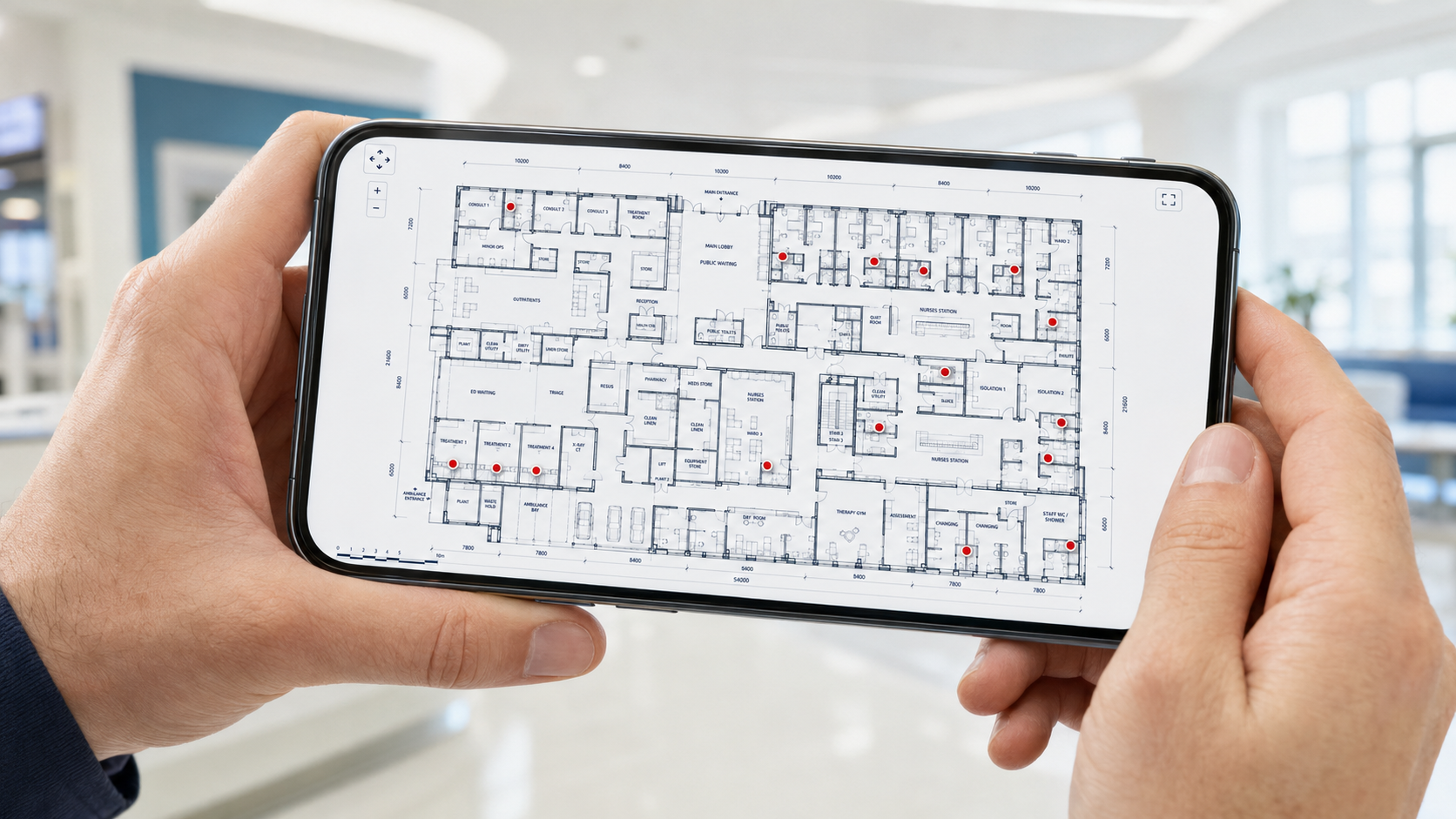
Site, building, ward and room
Unique shower reference
Challis scheme type
Current head colour and fitting date
Hose type and fitting date
Installer or responsible user
Photographic evidence
Condition or issue notes
Status and follow-up action
Previous activity history
The exact fields reflect the client’s requirements. The principle is to create one dependable location for the information that matters.
If a colleague or contractor changes, the history remains. If somebody queries an installation months later, the answer does not depend upon finding the original email.
Photographs also retain their context. Instead of remaining in a phone gallery or shared folder, an image can be connected to the correct shower, room, date and activity.
Easier audits and more useful reporting
Audits should confirm that a controlled process is working. They should not trigger a frantic attempt to recreate that process retrospectively.
Yet fragmented records can lead to hours spent checking spreadsheets, requesting reports, finding photographs and reconciling differences.
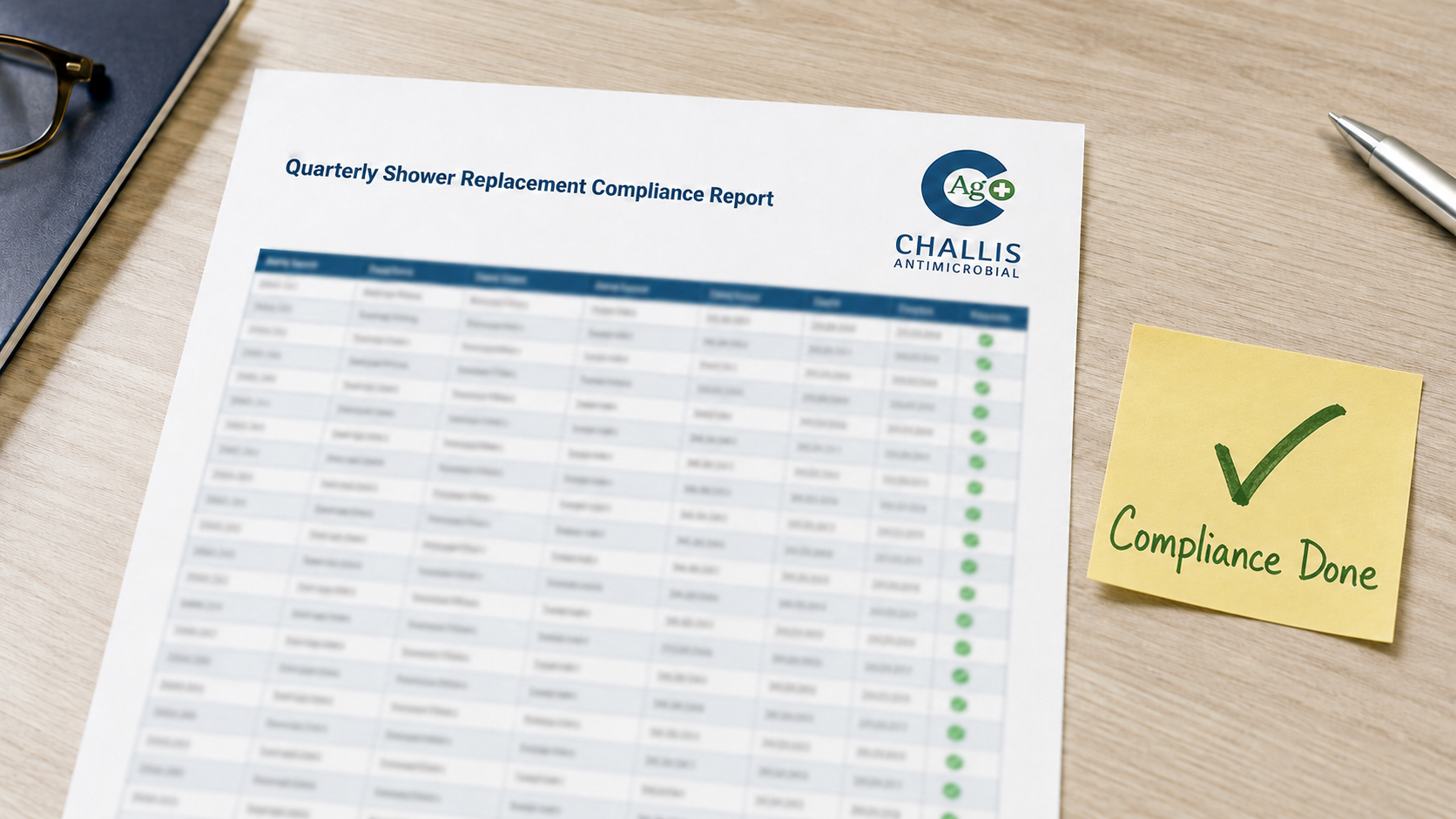
The digital asset history changes that model. Each update contributes to the audit trail when the work is completed. Authorised users can search and filter information by site, location, date, scheme, colour or status.
Reports can answer useful operational questions:
Which shower locations were updated during the current period?
Which locations are awaiting action?
What head colours are recorded across the estate?
Which assets have open issues?
What is the history for a specific room?
Which Sentinel hoses are approaching their planned annual action date?
Senior managers may want a concise summary. Estates professionals may require more detail. Contractors may need a focused work list. Auditors may require evidence for a particular location or period.
The same underlying information can serve those different needs without creating several competing versions.
The software does not replace professional oversight, competent people or the client’s water-safety governance. It supports them by organising evidence, improving visibility and reducing avoidable uncertainty.
A sensible route forward
A focused pilot is often the best next step.
The objective is not to digitise an entire estate on day one. It is to prove the process in a controlled area, learn from live use and build confidence.
A pilot can:
Select a representative group of shower locations.
Confirm the Challis scheme and cycles in scope.
Agree the essential fields and location structure.
Assign asset labels and user permissions.
Provide concise, practical training.
Complete updates during planned fitting activity.
Review the records, images and reports.
Gather feedback and refine the process.
This makes the benefits tangible. The organisation can see how quickly staff learn the workflow, how long an update takes and how the resulting evidence supports management and audit needs.
A win-win—and an undeniable necessity

The real benefit is not simply asset-tracking software. It is a simpler, connected way to manage shower compliance.
For fitting teams, the process is intuitive: fit the product, scan the label, follow the guided fields and save.
For estates and water-safety managers, information is organised, searchable and easier to review.
For infection-control and governance teams, there is a clearer route to time-stamped evidence and consistent reporting.
For clients, there is greater estate-wide visibility, better continuity and less dependence on fragmented spreadsheets or individual knowledge.
For contractors, completed work can be demonstrated more clearly, strengthening accountability and client confidence.
For Challis, the software supports Ag+ and Sentinel as complete operational solutions rather than standalone products.
Everybody gains from a process that is easier to perform and easier to prove. That is the definition of a win-win.
There is also a reality organisations can no longer comfortably ignore. If compliance activity is essential, accurate and accessible evidence of that activity is essential too.
If a simple digital process can reduce administration, improve consistency and make audits easier, continuing to rely on fragmented manual records becomes increasingly difficult to justify.
This is not about replacing professional judgement with software. It is about giving professional teams a better tool with which to record, coordinate and demonstrate work they already take seriously.
The Challis approach remains simple:
Fit it. Scan it. Prove it.
Visible control on the wall. Structured evidence behind it. Clearer reporting when it matters.
It is a win for fitting teams. A win for management. A win for compliance. A win for the client.
And as expectations for reliable audit evidence continue to rise, it is becoming not merely desirable, but an undeniable necessity.
Ready to make shower compliance easier?
Challis can work with your estates, water-safety, infection-control and contractor teams to explore a focused pilot based on your existing arrangements.
No unnecessary complexity. No technology for technology’s sake.
Just a simpler route from shower room to audit report.
Add Challis Ag+ as a preferred source on Google. Click on the link below to help us grow
https://google.com/preferences/source?q=https://www.challisagplus.com
Speak to Challis MS
Website: www.challisms.com
Email: info@challisms.com
Telephone: 01628 529024